Therapist Website Inspiration: Stunning Squarespace Website Designs That Work
Your website is often the first place a potential client goes when deciding whether to reach out for support. It is where trust begins, questions are answered, and first impressions quietly shape the decision to book a session. That is why thoughtful design matters, especially for therapists who want their online presence to feel calm, clear, and human.
If you are looking for therapist website inspiration, Squarespace offers a powerful balance of beauty and function. With the right layout, copy, and visual flow, a Squarespace site can reflect your values, communicate your approach, and guide visitors toward taking the next step with confidence.
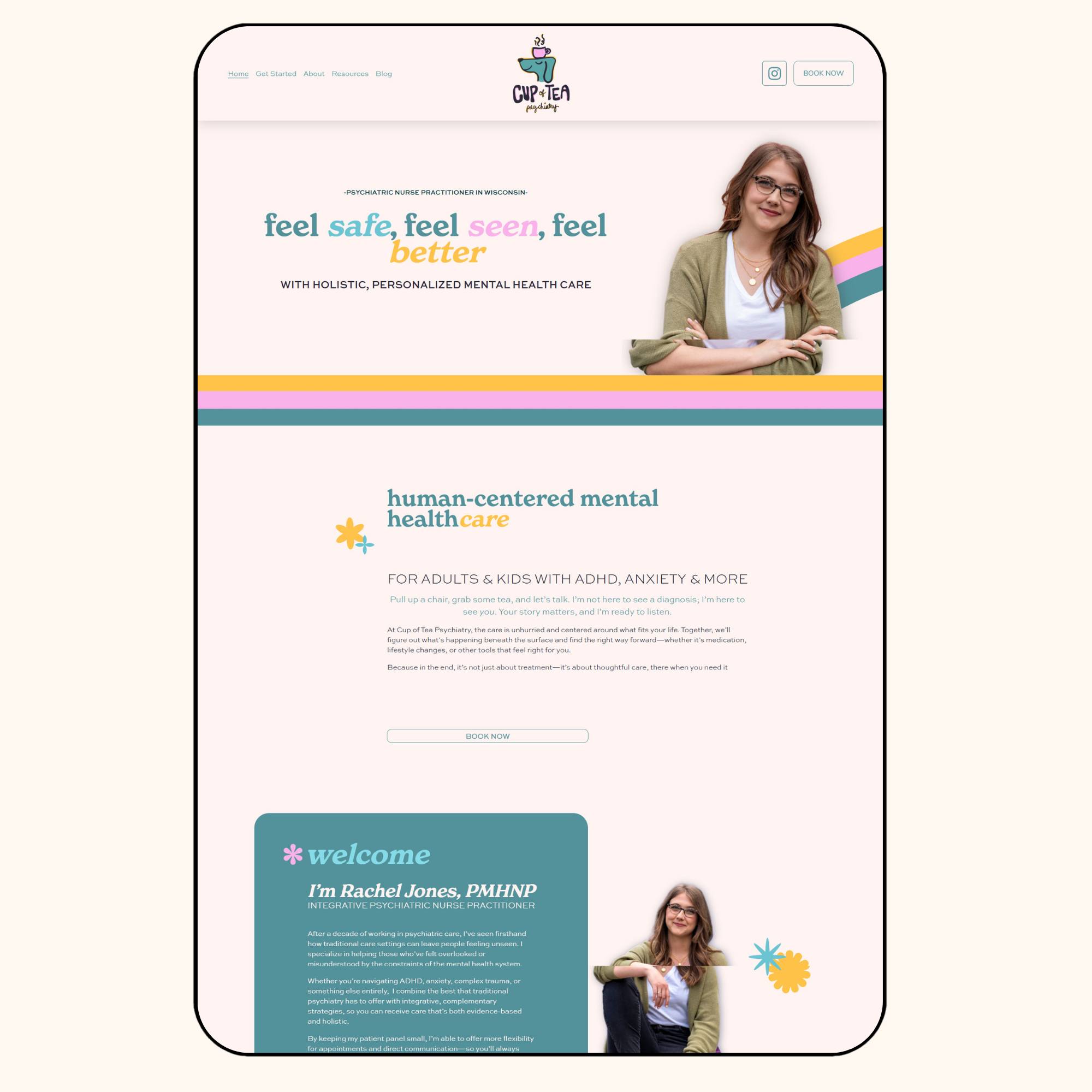
Cup of Tea Psychiatry
Rachel Jones, PMHNP
This website immediately feels warm, friendly, and human-centered. The layout uses soft section transitions, rounded shapes, and playful visual elements that help reduce the formality often associated with mental health care. Rather than feeling clinical, the design appears intentionally welcoming, which can help visitors feel at ease from the moment they arrive.
The dominant color palette includes soft teal, warm peach, creamy neutrals, and subtle pops of yellow. These colors are often associated with calm, safety, optimism, and emotional openness. The layered color bands and gentle curves create visual movement without overwhelming the viewer, making the site feel approachable and supportive.
From a therapist website inspiration standpoint, this design works well because it balances professionalism with personality. The copy sections are broken into manageable chunks, calls to action feel invitational rather than urgent, and the overall flow gently guides visitors toward learning more or taking the next step.
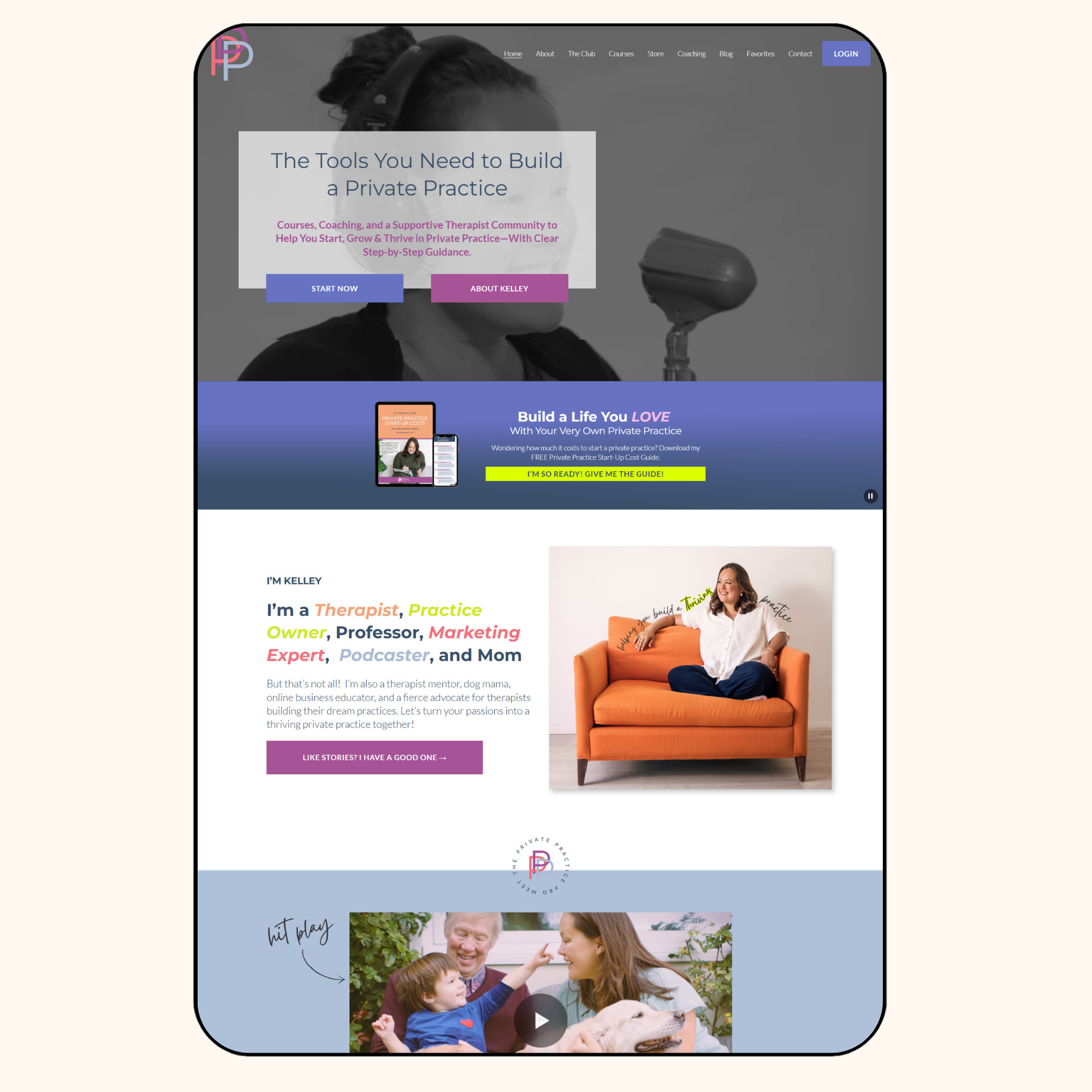
The Private Practice Pro
Kelley Stevens, Therapist, Business Coach
This website takes a more bold, energetic approach while still maintaining clarity and structure. The layout is content-rich but organized, using strong headings, clear sections, and consistent spacing to help visitors navigate a large amount of information without feeling lost.
The color palette leans into deep blues, purples, and bright accent colors like lime green and pink. These colors are often associated with confidence, motivation, and forward momentum. This approach appears well-suited for a brand that supports therapists as business owners, where clarity, empowerment, and action are key goals.
As a therapist website inspiration, this site shows how design can evolve alongside audience needs. It feels intentionally dynamic, speaking to therapists who are ready to grow, scale, or think differently about their practice. Despite its energy, the site still uses clear visual hierarchy to guide attention and reduce cognitive overload.
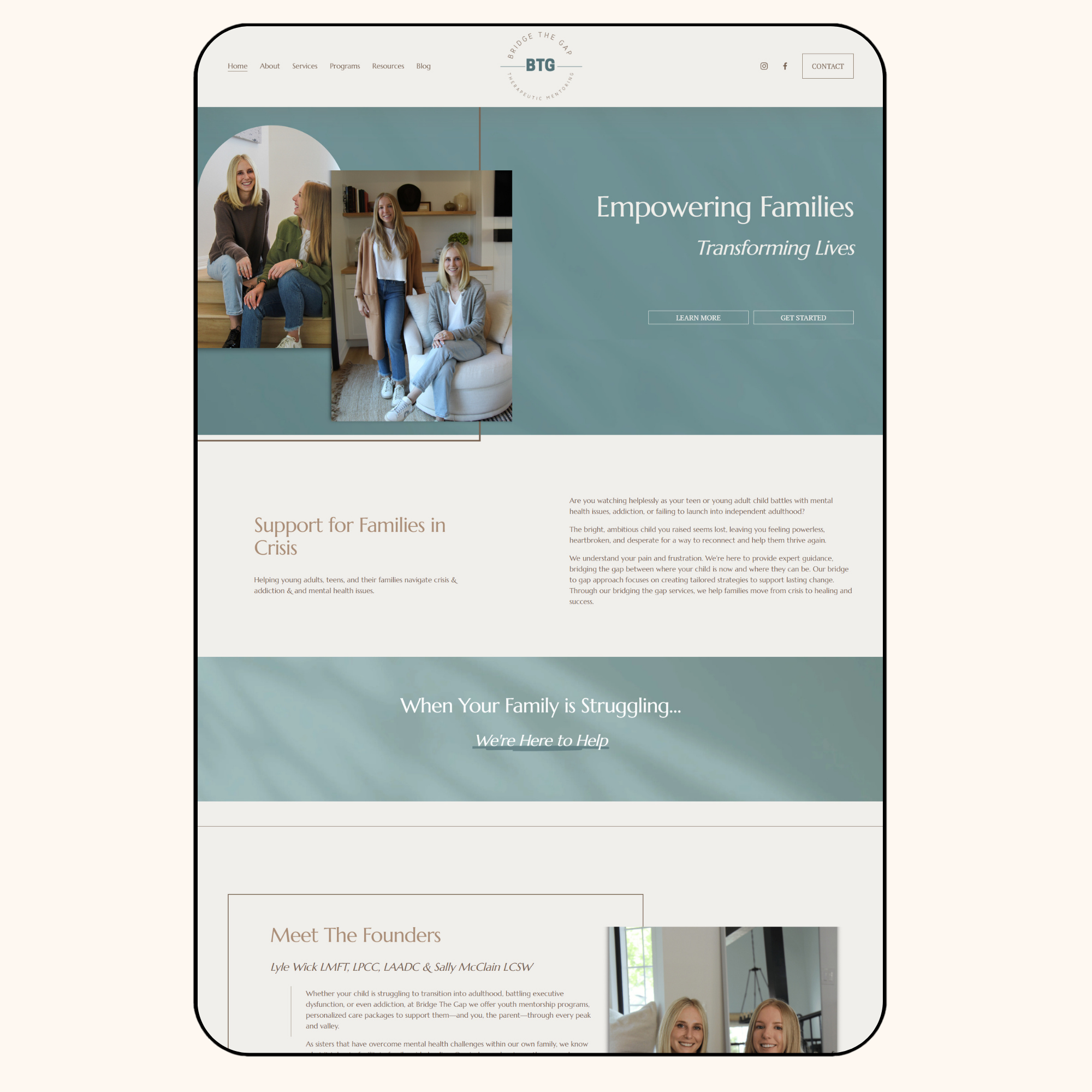
Bridge The Gap
Lyle Wick McClain, LMFT, LPCC, LAADC, and Sally McClain, LCSW
Bridge the Gap’s website uses a grounded, family-centered design that feels steady and reassuring. The layout combines lifestyle photography with structured content blocks, creating a balance between emotional connection and informational clarity. This approach helps visitors understand both the heart of the work and the practical services offered.
The color palette leans into sage greens, muted blues, and warm beige tones. These colors are commonly associated with balance, stability, and healing, which align well with family mentorship and recovery-focused services. The consistent use of these tones across sections creates a cohesive experience that feels intentional and calm.
This site works well for practices serving families or systems rather than individuals alone. As a therapist website inspiration, it shows how design can support complex offerings without feeling cluttered or confusing.
Healing Family Addiction
Kimberly Wick, LMFT, and Lyle Wick, LMFT, LAADC
This website emphasizes softness and emotional safety through its visual choices. Rounded imagery, gentle gradients, and spacious layouts create a sense of openness that can feel comforting to visitors navigating sensitive family or addiction-related challenges.
The design uses light blues, warm sand tones, and subtle texture elements that evoke calm and reflection. These colors are often associated with trust, emotional grounding, and hope, which can be especially meaningful for clients who may feel overwhelmed or uncertain when they arrive at the site.
For therapists looking for inspiration, this example highlights how visual gentleness can lower barriers to engagement. The site appears designed to meet visitors where they are, rather than asking them to be ready before they arrive.

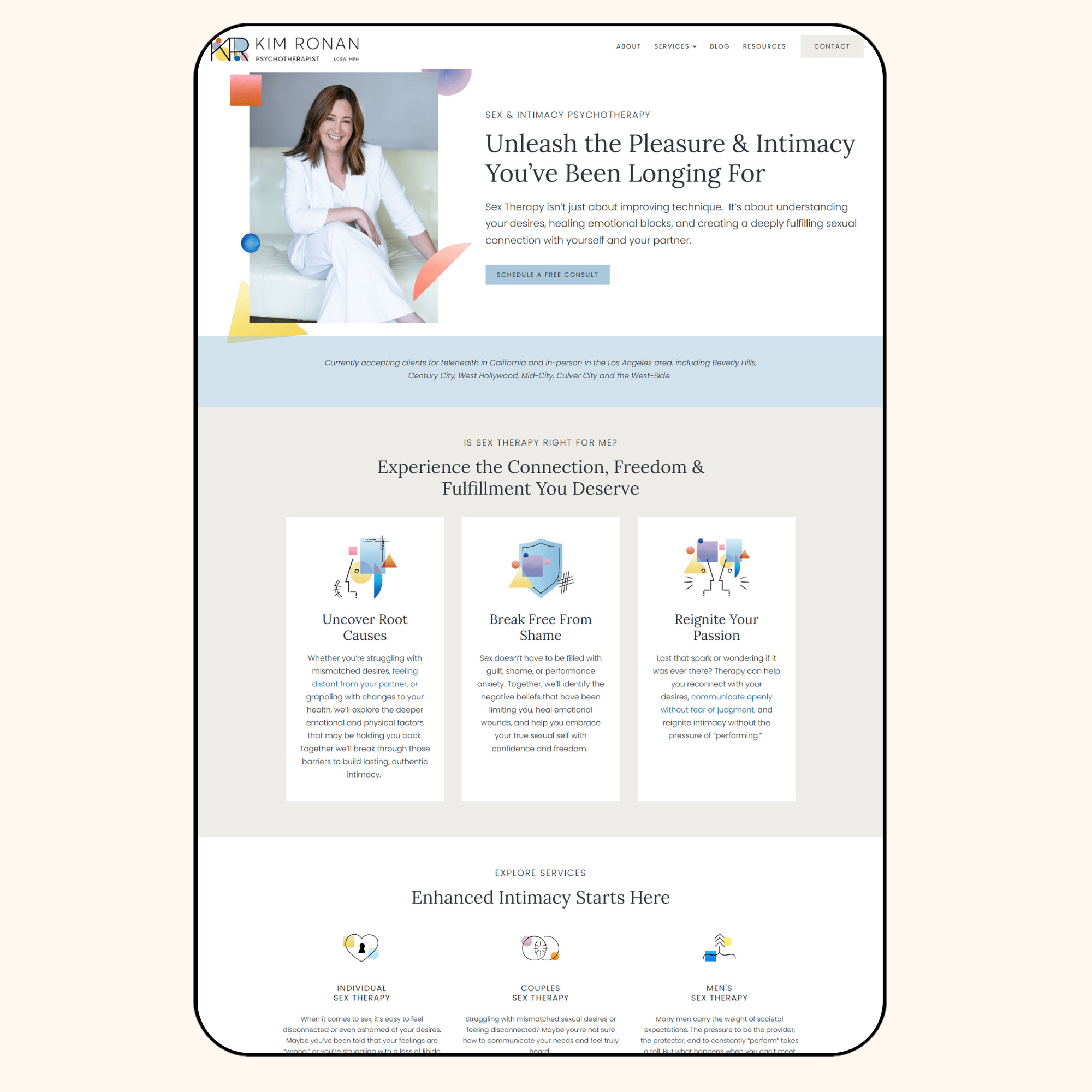
Kim Ronan
Kim Ronan, LCSW, MPH
This website presents a clean, calming layout with generous white space and soft accent colors that gently guide the eye. Muted blues, warm neutrals, and subtle pastel shapes create a sense of safety without feeling clinical or cold. The design appears intentionally uncluttered, allowing visitors to absorb information at a comfortable pace.
This visual approach often works well for therapy practices focused on intimacy, relationships, or sensitive topics. The balance of professional photography and minimal design elements helps humanize the therapist while still maintaining clear boundaries and professionalism. The site’s structure also supports intuitive navigation, making it easy for visitors to understand services and next steps without feeling overwhelmed.
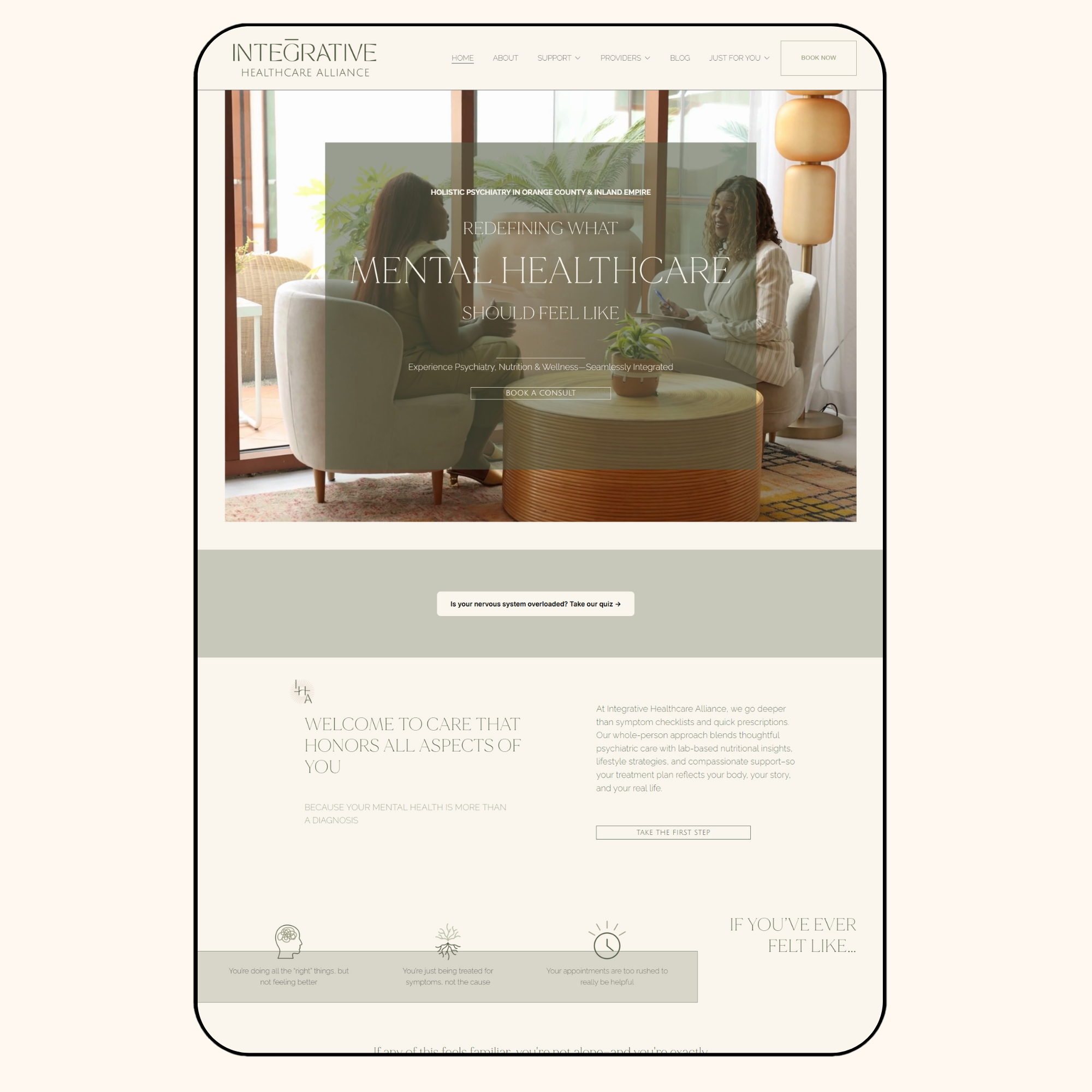
Integrative Healthcare Alliance
Paris O’Bike, PMHNP-BC
This site uses earthy tones, soft greens, warm beiges, and natural textures to create a grounded and restorative feel. The color palette appears designed to evoke balance and stability, which aligns well with integrative and holistic mental health services. The typography and layout feel modern but restrained, reinforcing a sense of credibility without sacrificing warmth.
The imagery throughout the site emphasizes calm environments and real human connection, which can help potential clients imagine themselves in care rather than focusing on clinical outcomes. This design approach often resonates with audiences who value whole-person wellness and want a healthcare experience that feels collaborative rather than transactional.
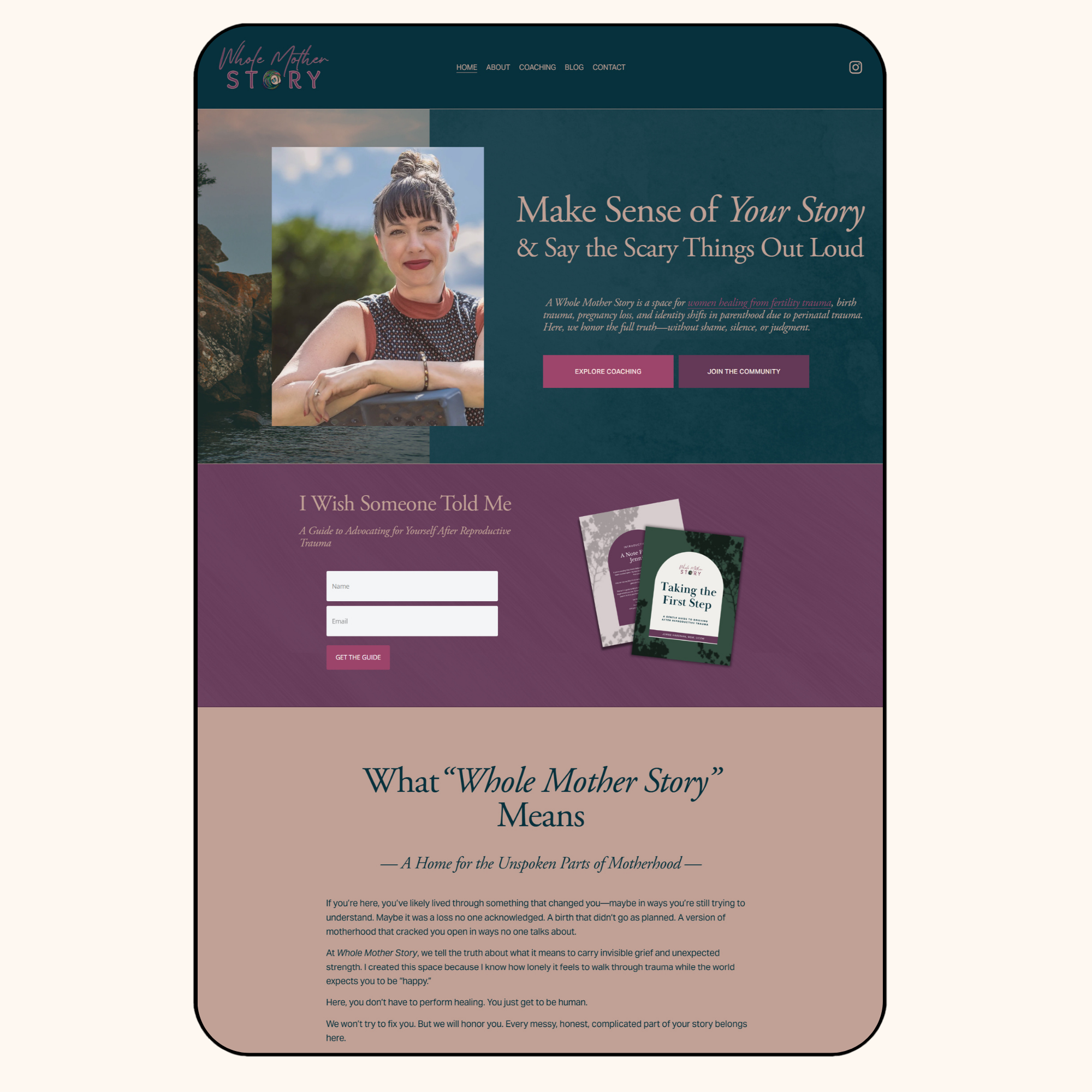
Whole Mother Story
Jennie Hardman, MSW, LICSW
This website stands out through its confident use of rich, layered colors such as deep teal, mauve, and warm rose tones. The palette feels expressive and emotionally attuned, which appears intentional for a brand centered on storytelling, identity, and lived experience. Rather than aiming for neutrality, the design embraces depth and presence.
This approach often works well for practices supporting trauma, motherhood, or identity-focused work, where emotional resonance matters as much as clarity. The layout balances strong color blocks with personal photography and thoughtful spacing, creating a sense of containment while still inviting exploration.
A Quick Look at Color Psychology in Therapy Websites
Color plays a quiet but powerful role in how a website feels. While no color guarantees a specific emotional response, certain associations are commonly recognized:
Blue is often linked to trust, calm, and professionalism
Green is associated with balance, growth, and wellness
Peach and soft neutrals can feel warm, human, and reassuring
Muted tones generally support a sense of safety and emotional regulation
For therapist website inspiration, the goal is not to follow trends but to choose colors that support emotional ease and clarity.
What Should Your Color Theme Be?
The right color palette depends on your practice, your audience, and how you want clients to feel when they land on your site.
Practices focused on trauma, anxiety, or family systems often benefit from muted, grounded tones
Coaching or skills-based practices may lean slightly brighter while still staying calm
Personal brand practices often use warmth and contrast to highlight the therapist’s voice
The most effective websites align visual choices with the emotional experience you want to offer. Design works best when it reinforces your values rather than competing with them.
Why This Matters for The Passive Practice
At The Passive Practice, the focus is on helping therapists build practices that feel sustainable, aligned, and intentional. Website design is a major part of that foundation. A well-designed site does not need to convince or persuade aggressively. Instead, it should quietly support trust, reduce friction, and make the next step feel manageable.
Looking at a therapist's website for inspiration through this lens helps shift design decisions from “What looks good?” to “What supports my future clients best?”
Designing for Connection, Not Perfection
Choosing the right design and color palette is not just about aesthetics. It is about creating a sense of safety, clarity, and alignment before a single conversation happens. Thoughtful design helps clients feel seen, understood, and supported from the very first click.
If you are building or refining your site and feel unsure about the visual direction that best fits your practice, The Passive Practice can help you create a website that reflects your values and supports meaningful connection without overwhelm.